
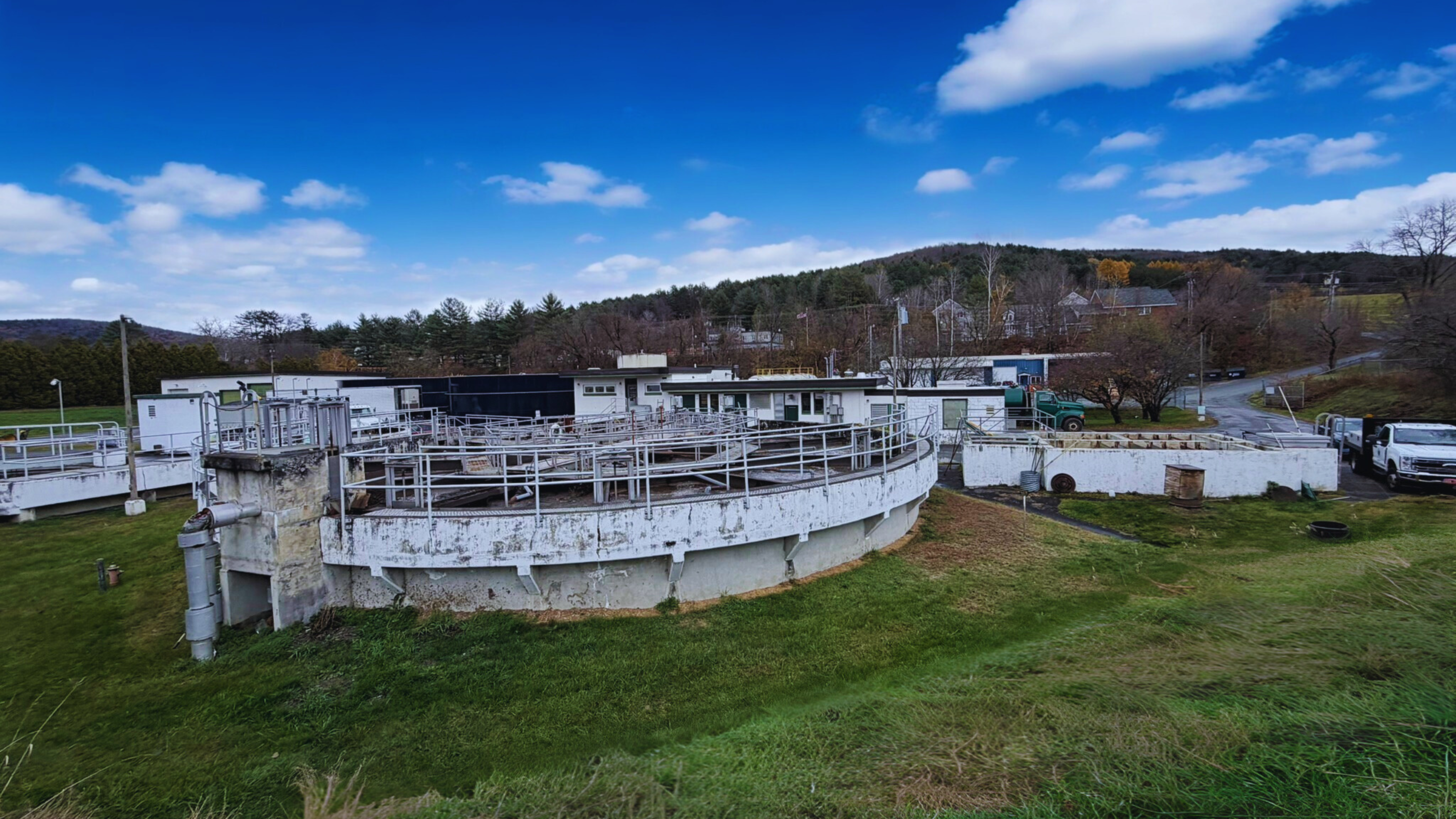
The Woodstock Main WWTF has been serving our community since 1965 and some of its infrastructure is original to the facility. The WWTF is permitted to treat 0.450 million gallons per day (MGD) of wastewater and has been meeting the requirements of its EPA Discharge Permit that ensure wastewater from residential, commercial, and educational institutions is treated before returning to the river. A new discharge permit with stricter nutrient limits will be issued for the facility in the next year. As the facility degrades due to age and wear and tear, flows continue to increase, and with the new stricter permit requirements, a major facility upgrade is necessary to ensure reliable treatment of Woodstock’s wastewater. The proposed WWTF upgrade will: address aging infrastructure, provide redundancy and reliability, prepare for community growth, be designed for increasingly stringent effluent limitations, increase operational and energy efficiency, and provide climate change resiliency for the community.
Existing Facility Milestones

1965
Constructed as an activated sludge treatment process with a package aeration tank/secondary clarifier.
1973
Flood Berm & Dewatering Pump Station Addition.
1982
Major upgrade including secondary clarifiers and process building.
1988
New sludge handling facilities (storage tank #1).
1998
New sludge handling facilities (storage tank #2) and blower building addition.
2006
Headworks was upgraded with a mechanical influent screening.
2016
New aeration tank blowers with variable frequency drives and new motor control center (MCC) were installed.

Glimpse into the treatment process

Wastewater enters the facility through our Headworks Structure. This initial stage screens remove grit and pumps influent (untreated wastewater) from a wet well into the biological treatment process. From the wet well, the influent enters the aeration basins and clarifiers, which include two 5-celled aeration basins and two secondary clarifiers. These tanks work together to break down wastewater with biologic organisms. After a calculated period and based on the chemistry of the influent, the wastewater is considered clarified and enters the chlorine disinfection process. This process consists of two contact chambers that ensure the treated wastewater is sufficiently disinfected with chlorine. At this point, wastewater is considered treated effluent and is safely discharged to the Ottauquechee River.
While the disinfected effluent is discharged to the river, sludge that is a by-product of the treatment process is removed from the liquid stream and is pumped to the solids storage facility. The Woodstock Main WWTF does not currently have the technology or equipment to further treat or process solids that are generated by the treatment process. Currently sludge is stored for up to six months before being dewatered by a private contract dewatering company and dewatered sludge is hauled away for disposal.
To comply with regulatory requirements and maintain ecological health of the river, the facility staff measures and tests the effluent for flow rate, solids, nutrients such as nitrogen and phosphorus, chemicals such as chlorine, and harmful bacteria before it is discharged to the river. The facility staff rigorously tests the water quality of the Ottauquechee River above and below the outflow location to ensure the protection of the waterbody’s ecological system.
Anticipated NPDES Permit
The Town of Woodstock is currently operating on an extension of the June 2015 Permit. This permit authorizes and regulates the discharge of effluent into the Ottauquechee River. Typically, new permits are issued every five years, but this extension has been issued based on the understanding that the Town is in the process of improving the plant. Were it not extended, the Town would be required to meet more stringent requirements regarding phosphorus discharge and other limits and could be vulnerable to regulatory penalties. The Vermont Department of Environmental Conservation traditionally seeks to work with communities and reserve penalties for communities not showing intent to meet established regulatory limits, and this has been the case for Woodstock. In 2024, a draft NPDES permit for the Woodstock Main WWTF was issued, and it details the discharge limits that will be required to be met. In its current condition, the Woodstock Main WWTF will not be able to meet the new discharge limitations and will be given a schedule by the State of Vermont to bring the facility into compliance. Typically, the State works with a community before an enforcement action and monetary penalties are enacted. We expect the State will continue to support the Town as long as meaningful progress towards meeting the new requirements is demonstrated.
The proposed improvements to the WWTF, including the implementation of a state of the art Biological Treatment Process technology (to reduce phosphorus and nitrogen loading to the river), ultraviolet disinfection (rather than chemicals), and a Dewatering Technology (to reduce operational cost associated with contract dewatering) combine to form a reliable wastewater treatment facility that will meet the effluent limitations of the draft NPDES Permit as well as future more stringent effluent nutrient limitations.
Anticipated Facility Improvements
To address effluent permit requirements, age-related needs, and redundancy requirements, upgrades to various components of the facility are necessary. The facility requires critical updates in four primary process areas: headworks, biological process, effluent pump station, disinfection and dewatering. The headworks, last updated in 2006, is severely corroded by hydrogen sulfide gas. The aeration tank has significant structural damage and would likely experience catastrophic failure were the tank drained. The effluent pump station dewaters the site during stormwater and river flooding events and has insufficient capacity and redundancy needed to address expected rain and flooding events. The disinfection system consists of two chlorine contact channels and has a flow rate limit, above which complete disinfection is not attained. At peak flows, this flow rate limit is exceeded. Also, the disinfection tank structure is below the 100-year flood elevation and thus susceptible to complete failure if the effluent pump station cannot maintain suitable water levels.
The proposed upgrade to the facility will provide a new Headworks with improved screening and grit removal, needed to protect pumps and process throughout the process. It will also include an equalization tank after the screening and grit removal process to dampen peak flows. New influent pumps will be provided to pump raw wastewater from the Headworks to the new biological treatment system. The new biological treatment process will be a cutting-edge technology called an Aerobic Granular Sludge process that requires only one treatment tank (as opposed to the current two tank system), less chemicals and less oxygen provided by energy intensive air compressors (or blowers). Disinfection will be provided by an ultraviolet process that eliminates the use of chemicals for disinfection.
In the new upgraded facility, sludge that is currently dewatered by a contract dewatering company and hauled away from the plant for disposal, will be dewatered by plant operators using new dewatering equipment and facilities. A new dewatering press will be installed in a renovated maintenance garage and will discharge dewatered sludge cake to a sludge container that is hauled away for final disposal. With the addition of the sludge dewatering facilities to the WWTF, the Town will be able to manage their biosolids more efficiently, greatly reducing sludge dewatering and disposal costs.
The new plant will be run by a modern SCADA system which stands for Supervisory Control and Data Acquisition. This is a computer-based monitoring and control system that:
- Monitors flow rates, tank levels, pump status, chemical dosing
- Controls the operation of equipment like pumps, valves, and blowers
- Alerts operators when conditions go outside of set parameters
- Logs data for compliance, troubleshooting, and optimization
The combination of modern and more complete treatment processes with modern and more complex control systems results in a plant improvement that will reduce operational costs and environmental impact.
Clean Energy for a Sustainable Future
As part of the proposed upgrade, our goal is to:
- Reduce greenhouse gas emissions and use of fossil fuels
- Reduce carbon footprint during construction and operation
- Reducing chemical consumption
- Reduce energy consumption
- Improve operator safety
- Increase operator control and optimization potential
- Improve treatment efficiency
- Improve process stability and redundancy
- Comply with the 2024 Draft Discharge Permit and expected future regulatory requirements
Some of the viable green energy and efficiency options identified to be studied and considered in the upgrade are:
Geothermal Heat System
Replacing the existing, conventional, fossil-fuel powered heating systems with geothermal heat pump units will reduce energy consumption and corresponding emissions by up to 44% compared with air-source heat pumps and up to 72% compared with electric resistance heating such as furnaces and baseboard heaters.
Solar PV Systems
Installation of solar panels at the WWTF will reduce plant-wide energy consumption.
The addition of these components will help keep wastewater rates low for the Town’s rate payers, reduce the facility’s carbon footprint, and support a clean energy future.